Many global buyers turn to Indonesia for wood because the country offers competitive pricing, strong production capacity, and a wide range of species suited for furniture, construction, and specialty products. At the same time, many companies hesitate because they are unsure how to confirm the legality of the wood they purchase. Regulations in Indonesia are strict, but the verification process can feel complex if you are not familiar with the documentation or the local compliance systems.
Concerns about illegal logging, inconsistent paperwork, or unclear supplier credibility can slow down procurement teams. These issues also increase the risk of delays at customs and potential compliance penalties in markets that follow regulations like the Lacey Act and the EU Timber Regulation. Buyers need a clear and reliable way to confirm that the wood they import meets every legal and sustainability requirement.
In this article, we break down the checks that matter most. You will learn which certifications to review, how to validate suppliers, and what steps to take before placing an order. Our goal is to give you a practical framework you can apply to your sourcing process and reduce risk when buying from Indonesia.
Understanding Indonesia’s Wood Legality Landscape
Importing wood from Indonesia offers strong commercial benefits, but regulatory pressure is high in markets like the United States, Europe, and Australia. Authorities expect importers to prove that every shipment is sourced legally. Failure to do so can lead to shipment seizures, long delays, or compliance penalties. Brands also face reputational risk if illegal timber enters their supply chain.
For many procurement teams, legality checks are now a core part of risk management. Buyers want evidence of legal harvest, traceability back to the forest of origin, and documentation that passes scrutiny at customs. This level of transparency can feel demanding, but it protects the entire supply chain.
Key Certifications to Verify Before Purchasing Indonesian Wood
SVLK (Sistem Verifikasi Legalitas Kayu)
Indonesia created the SVLK system to ensure that all domestically produced and exported wood originates from legal sources. The system verifies forest permits, harvesting rights, transport documents, and mill compliance. It also reviews chain of custody from the forest to the final exporter.
All Indonesian wood products for export must carry a V-Legal Document. This is the country’s legality certificate and it is issued only after an audit by government-approved verification bodies. Each document has a unique number that buyers can verify through official channels.
SVLK has played an important role in reducing illegal logging and improving traceability across the industry. It also aligns with international expectations that buyers maintain a due diligence system.
FSC and PEFC Certification
Beyond legality, many global buyers look for sustainability certification. FSC and PEFC are the most widely recognized schemes for responsible forestry. Both systems include Chain of Custody (CoC) certification, which confirms that the wood has been tracked through each step of the supply chain.
FSC tends to be the preferred option in North America and Europe because of its strict environmental criteria. PEFC is also common, especially for larger plantations. Buyers can verify FSC certificates through the official global database, which gives real-time information on validity and scope. This quick check helps filter out expired or fraudulent claims.
Export Documentation to Request
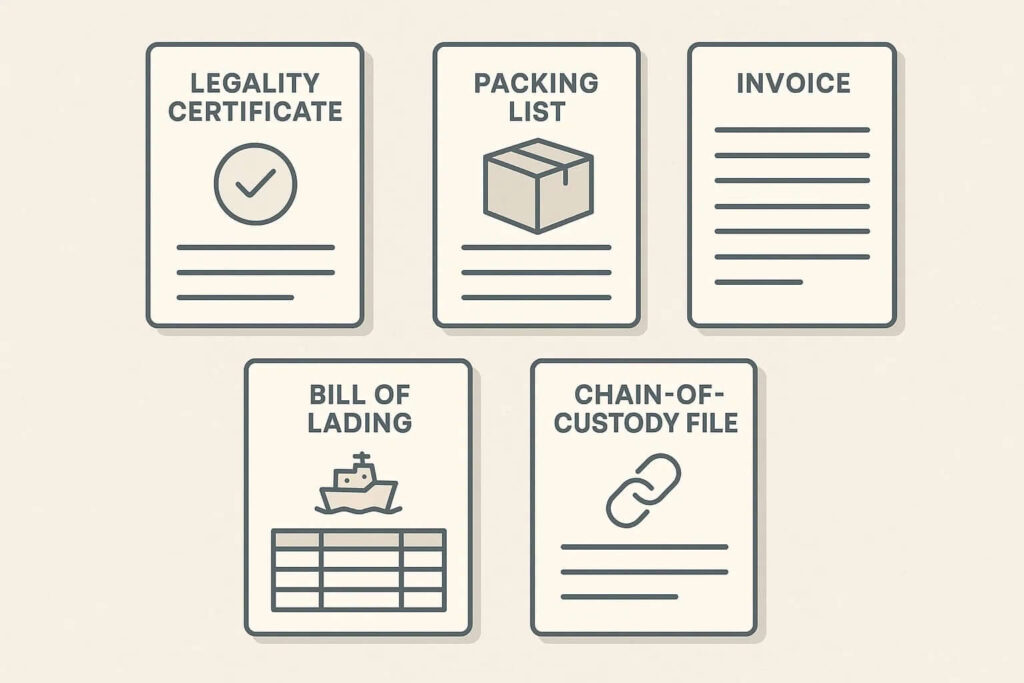
Before confirming a shipment, buyers should review several key documents:
- V-Legal Document confirming the legality of the wood
- Commercial Invoice and Packing List with clear species names, volumes, and HS codes
- Bill of Lading issued after the cargo is loaded
- Business licenses demonstrating that the mill or factory is legally registered
- Chain-of-custody documentation, if FSC or PEFC is involved
How to Validate Supplier Legitimacy in Indonesia
Confirming Business Registration and Factory Legitimacy
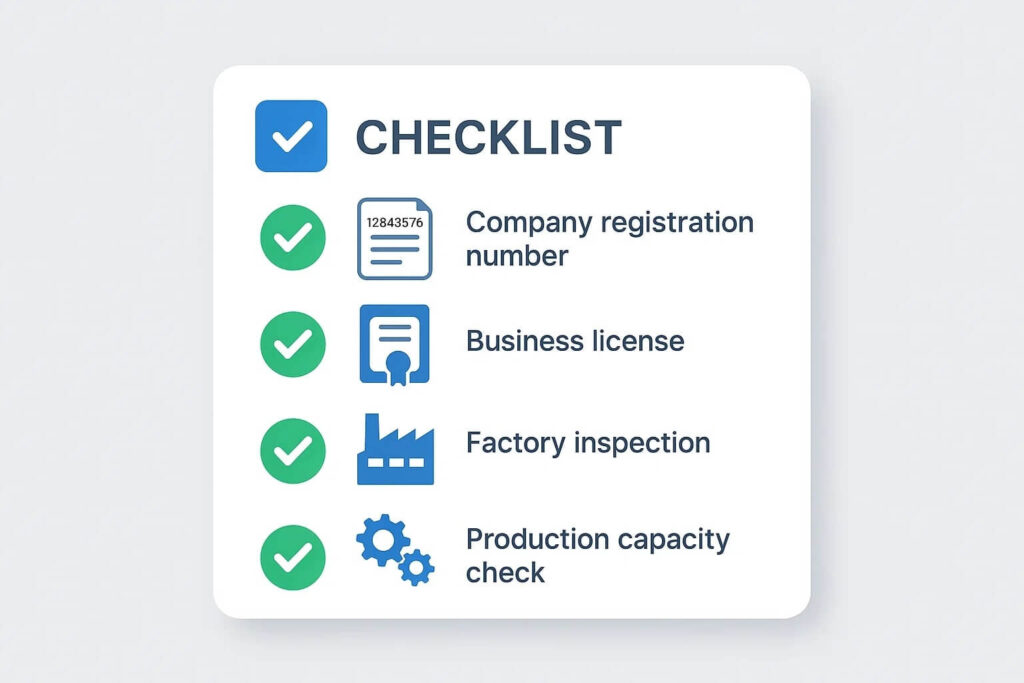
Supplier validation starts with basic company checks. Every legitimate Indonesian manufacturer should have a set of registered licenses, which usually includes an NIB company registration number and permits related to trading or manufacturing activities. Buyers can request these documents and cross-check registration details online through the Indonesian government’s database.
It also helps to confirm that the supplier operates a real production facility. Requesting photos or videos of the factory floor, log yard, and equipment is a simple first step. Some buyers also ask for a short live video call from inside the production area. This quick check often exposes traders attempting to present themselves as manufacturers.
Running Compliance Checks on Exporters
Exporters must provide a V-Legal Document for every shipment. This document includes a traceable number, the name of the issuing verification body, and an expiration date. Buyers should confirm all three. A mismatch can point to outdated certification or improper use of paperwork.
Additional checks can be valuable when reviewing higher volume orders. Look for consistent HS codes, production capacity that matches order size, and species names that align with Indonesia’s legal harvest list. A supplier with stable certification history and a clean audit record is more dependable than one that frequently renews documents late.
Conducting Factory Visits or Third-Party Audits
Nothing replaces an on-site assessment. If your volume is large or your compliance requirements are strict, a factory visit provides clarity. Buyers can examine how logs enter the facility, how they move through the production process, and whether the mill’s documentation aligns with physical inventory. Log yard tags, batch numbers, and internal ledgers should match what appears on the supplier’s documents.
Many buyers work with an experienced Indonesia sourcing agent to simplify supplier verification and on-the-ground compliance checks.
Red Flags to Watch Out For When Sourcing Wood in Indonesia
Documentation Inconsistencies
Even small inconsistencies matter. A supplier who hesitates to share basic documentation or sends incomplete paperwork may be hiding gaps in their traceability system.
Pricing That Seems Too Good to Be True
Illegal or unverified wood often enters the market at unusually low prices. If a quote is far below the range offered by other certified suppliers, take it as a signal to slow down and ask more questions. Many buyers encounter situations where the initial price looks attractive but the shipment later triggers inspection because the documentation did not match the declared species or origin.
Supply Chain Gaps and Traceability Issues
Traceability is one of the strongest indicators of supplier reliability. If a supplier cannot clearly explain where their logs originate or cannot show a consistent chain of custody, this is a major warning sign. Some traders claim to operate factories they do not actually control. Others provide incomplete production records that do not align with expected capacity.
Moving Forward With Confidence When Sourcing Wood From Indonesia
Verifying wood legality in Indonesia becomes far more manageable once you understand how the system operates. SVLK lays the foundation, but effective due diligence depends on reviewing certification validity, checking supplier registration, and confirming that every document in the chain aligns with the physical flow of materials. Companies that invest time in traceability checks, factory validation, and supplier screening reduce the chance of customs problems and strengthen long-term sourcing stability.
For companies that need deeper guidance, at Source One we offer practical help with supplier validation, legality confirmation, and end-to-end sourcing oversight across Indonesia’s wood sector.